

Cement and concrete are often used interchangeably, but they’re not the same thing. They are made of different materials and have distinct applications. Let’s do a little comparison of cement vs concrete so you can make informed decisions for your next home project.
Why Are Cement And Concrete Often Confused?
When people say “cement” when they mean “concrete,” they’re partially correct. Cement is the key ingredient that gives concrete its strength. It would be akin to calling a cake “flour.” Flour is a big part of the cake, but it’s not the finished product.
Cement vs Concrete Ingredients
Cement
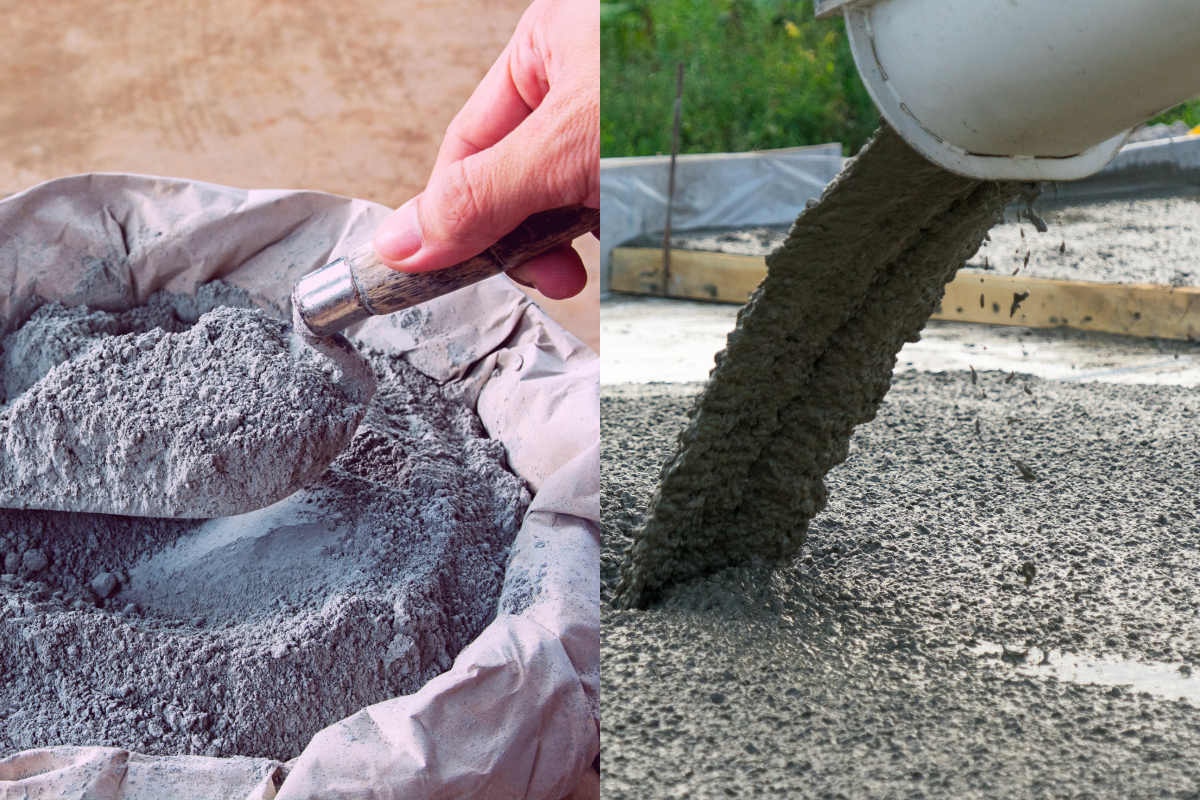
Cement is a binder: a fine gray powder made from limestone, clay, shells, and silica sand. These raw materials are heated in a kiln until they form small nodules called clinker, which are then ground into the powder we know as Portland cement.
The name dates back to the early 1800s in England. A mason named Joseph Aspdin invented the material in 1824 by heating a mixture of limestone and clay in his kitchen stove. He thought the result looked very much like a popular building stone from the Isle of Portland, which was a pale gray limestone widely used in English architecture at the time.
When mixed with water, cement undergoes a chemical reaction called hydration. It hardens and binds whatever it’s mixed with. Cement is a key ingredient in concrete, which is exceptionally durable. On its own, however, cement is too brittle and prone to cracking to be used as a finished building material.
Concrete
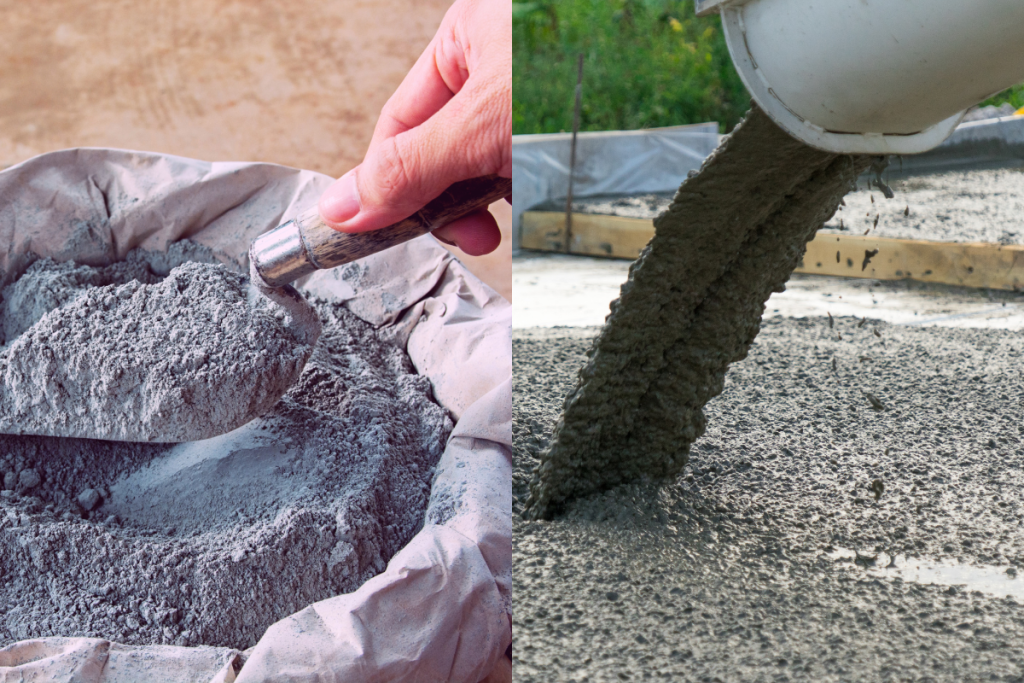
Concrete is a composite material consisting of:
- Cement (the binding agent)
- Aggregates such as sand, gravel, or crushed stone
- Water, which activates the cement
- Optional additives that enhance workability, strength, or weather resistance
When the ingredients are properly proportioned and cured, concrete becomes one of the most durable and versatile materials in modern construction.
Cement vs Concrete Applications
Cement
While cement isn’t typically used by itself, it plays a vital role in many materials and construction applications. Here are the most common:
1. Concrete Production
Cement is the glue that holds concrete together. It binds sand and gravel (the aggregates) into a solid mass once the mixture hardens. Roughly 10–15% of concrete’s total volume is cement– just enough to create a durable bond without making the mix too brittle.
2. Mortar for Masonry
When mixed with sand and water (and sometimes lime), cement becomes mortar, which is the paste that holds bricks, stones, and concrete blocks together. Mortar provides both adhesion and cushioning, helping distribute weight evenly in walls, chimneys, and walkways.
3. Grout and Repairs
Cement-based grout fills the spaces between tiles and helps anchor bolts or rebar into place. Specialty cement mixes are also used for patching small cracks or holes in concrete surfaces, though they’re best suited for minor cosmetic repairs.
4. Plaster and Decorative Finishes
Cement plaster, sometimes called cement render, is applied to walls and ceilings to create a smooth or textured surface. It’s also used for decorative architectural elements, like cast moldings or statuary.
5. Specialty Applications
Certain types of cement, like rapid-setting or white cement, are used for quick repairs, aesthetic finishes, or specialty projects such as terrazzo flooring and artistic concrete work.
Important Note: Cement alone is almost never used as a walking surface. It sets quickly, shrinks as it dries, and would crack under normal foot traffic or changes in temperature.
Common Applications for Concrete
Because of its strength and adaptability, concrete is used virtually everywhere, from residential driveways to massive bridges. Here are some of its most common uses:
1. Driveways, Sidewalks, and Patios
Concrete is the go-to choice for flatwork surfaces because it provides strength, longevity, and design versatility. Homeowners can choose between brushed, stamped, or stained finishes for an attractive look that stands up to decades of use.
2. Foundations and Slabs
Most homes and buildings sit on a concrete foundation. Concrete footings, walls, and floor slabs provide a stable, moisture-resistant base that supports the structure and prevents settling.
3. Structural Construction
Concrete is the backbone of bridges, highways, tunnels, and high-rise buildings. When reinforced with steel bars or mesh, it can bear tremendous loads and resist tension, compression, and bending.
4. Retaining Walls and Landscape Features
Concrete blocks and poured concrete are ideal for retaining walls, garden edging, planters, and outdoor seating. They withstand soil pressure, moisture, and freeze-thaw cycles better than wood or masonry alternatives.
5. Decorative and Architectural Uses
Modern concrete can be polished, stamped, stained, or even colored with pigments to achieve a custom aesthetic. It’s used in countertops, flooring, decorative facades, and even furniture for its industrial, minimalist look.
6. Infrastructure and Industrial Applications
From airport runways to dams and parking garages, concrete’s high compressive strength and long service life make it indispensable for large-scale projects that demand stability and resilience.
Concrete Leveling In Minneapolis
As we have discussed, concrete is exceptionally durable, but it is not immune to damage. This is especially true in Minnesota, where our freeze-thaw cycles cause soil beneath concrete to shift and sink. Get your concrete ready for the upcoming winter and contact NHI to repair your driveway, walkway, or any other uneven concrete surface.