
Uneven or sunken concrete isn’t just an eyesore, but also a safety hazard. Whether it’s a driveway, sidewalk, patio, or foundation, sinking concrete can create a tripping hazard, drainage issue, and costly structural damage. Thankfully, concrete leveling with polyurethane foam is a fast, affordable, and environmentally friendly solution that restores your hardscape surfaces without the hassle of replacement. Please keep reading to learn more about the advantages of concrete lifting versus a full replacement.
What Is the Purpose of Concrete Leveling?
Concrete leveling, also called concrete lifting, is designed to correct uneven concrete by stabilizing the soil beneath and then raising concrete slabs that have settled due to settling, soil erosion, or poor installation. The goal is to restore the concrete to its original elevation to eliminate trip hazards, and improve function and appearance.
In general, there are two approaches to leveling out concrete: polyurethane foam injection and traditional mudjacking.
Mudjacking
Mudjacking, also called slabjacking, involves pumping a hand mixed slurry mixture (usually cement aggregate, limestone, sand, and water) under the sunken concrete through holes drilled through your concrete (1.5-2 inch diameter) every 1-2 foot on center. The mixture packs beneath the slab and this back pressure provides lift. While it has proven results at the point of installation, there are a few reasons why our company does not use this method. For one, the consistency of the hand mixed slurry is difficult to guarantee, making the longevity of the resulting installation vary by job.
Secondly, the concrete slurry is heavy – typically between 100-150 lbs/cuft. This added weight to already unstable soil increases the odds that the concrete may sink again over time. Lastly, the slurry mixture can take days or, if the mixture is off, years to fully set – and even then it is not structural. In order for the mixture to flow and pack tightly to initiate lift, the slurry does not contain the larger aggregate found in traditional concrete, and is affectionately referred to as “mud”. Once the application is complete, the 1.5-2 inches in diameter holes must be repaired to keep out moisture. Even with the most meticulous methods, these monsters are less aesthetically appealing.
Polyurethane Foam Injection (Polyjacking or Foam Lifting)
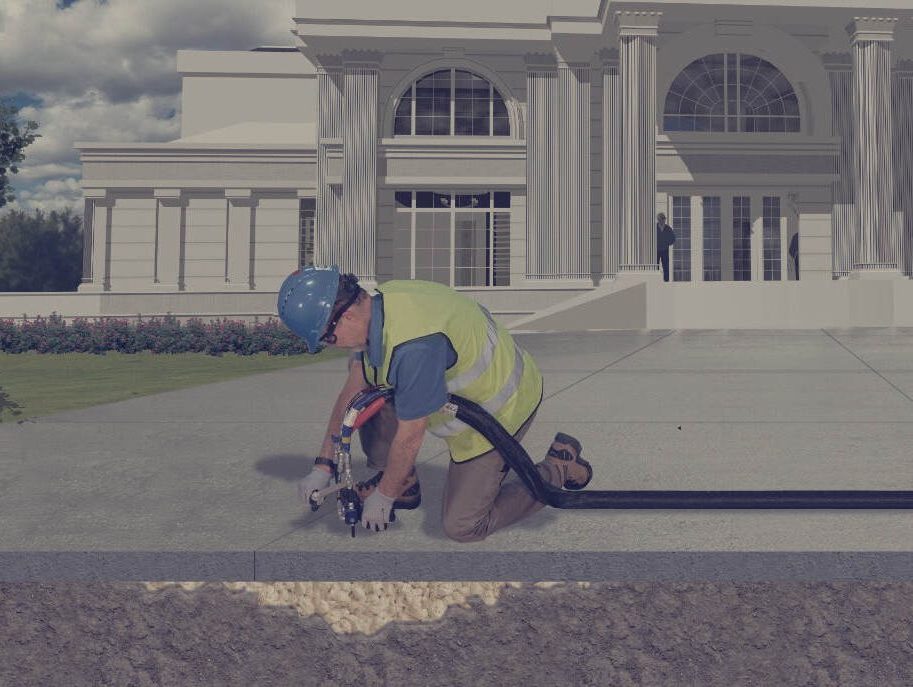
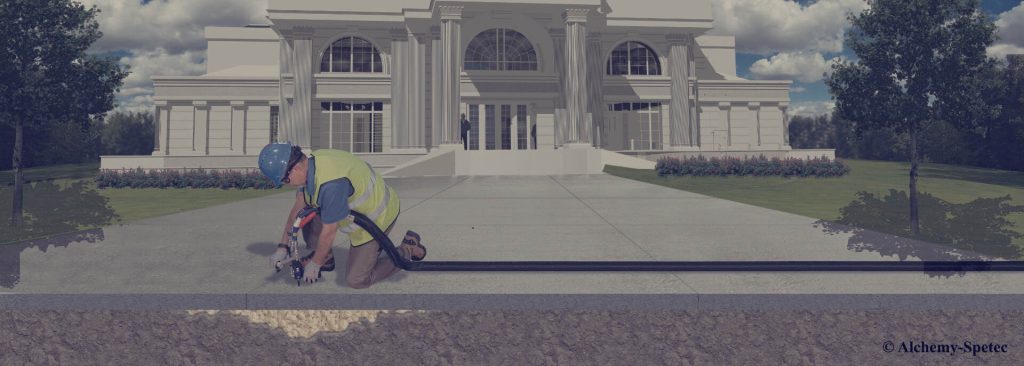
For your investment, you can’t beat the polyurethane foam injection method of concrete leveling. Foam lifting uses expanding polyurethane foam which when injected through a ⅜ inch hole as a liquid first fills all void areas. As it begins to expand it initiates increasing the soil compaction and once a solid foundation is established it begins to lift the concrete. Polyurethane foam has several advantages over mud:
- Lightweight – Our injection foams range from 3-10 lbs/cuft. This doesn’t add significant weight to the surrounding soil, which when paired with it’s expansive qualities which increase soil compaction reduces the risk of future sinking
- Fast curing time – Within 15 our foams are cured 90%. This allows for near immediate ability to return concrete into service, which is highly advantageous to mudjacking or full replacement.
- Stronger and more stable – The foam is water-resistant (hydrophobic), so if there is standing water or saturated soil beneath the concrete it will push the water out as it expands! This also means it will not wash away through erosion over time.
- Smaller drill holes – We use the smallest injection holes on the market (⅜ inch diameter), spaced every 3-4 feet, making sealing and masking a breeze.
- Longer-lasting – Polyurethane foam is structurally stable. It has been used by the Italian Government to correct the Leaning Tower of Pisa! Its high compressive strength and controllability make it an amazing technology for a lasting solution.
Advantages of Concrete Leveling vs New Concrete
If your concrete has started sinking, replacing it might seem like the only option. However, concrete lifting offers several benefits over tearing out and pouring new concrete.
1. Concrete Lifting Is Cost-Effective
- Leveling is typically 40-65% more affordable than tearing out and pouring new concrete. There is no need for demolition, disposal, or extensive labor costs associated with replacement.
2. Concrete Leveling Is Faster
- Leveling can usually be completed the same day and, once work is completed, it is ready for use. Minimal downtime for home and business owners means less disruption to operations and daily activities. New concrete requires days (or even weeks) between demolition, pouring, and curing before being put into service.
3. Concrete Leveling Is Way Less Disruptive
- No heavy machinery or large-scale excavation required for concrete leveling. There is no construction mess or impact to the surrounding landscaping. Drilling small injection holes every 3-4 feet also means it is a quieter job than the hammering required to demolish old concrete.
4. Longer Lifespan in Certain Conditions
- Foam injection leveling creates a water-impervious, stable base that won’t settle as easily as new concrete installed over poorly compacted soil.
- New concrete will crack and settle over time, especially in areas with unstable soil, poor water management or extreme freeze-thaw cycles like we experience here in Minnesota.
5. Environmentally Friendly
- Concrete leveling avoids demolition waste that ends up in landfills. It also reduces raw material usage, such as cement, gravel, and water needed for a new pour.
When Should You Choose New Concrete Instead?
While leveling has many advantages, new concrete may be necessary if:
- The slab is severely cracked or deteriorated beyond repair.
- You need to completely redesign the area (such as changing elevation, shape, or overall functionality).
- The slab has already been previously leveled multiple times and continues to fail. There could be a source of water leakage or drainage that needs to be addressed beneath the slab. An example of this is a compromised irrigation line with a slow leak that is accelerating settling.
For most sinking or uneven concrete issues, however, leveling is the faster, and more cost-effective solution compared to replacement.
What Is the Process of Concrete Leveling?
In the case of foam injection, which is our preferred method, you can expect the following:
1. Assessment & Preparation
- We will inspect the sunken concrete and determine the extent of the damage.
- The underlying cause (such as water management, soil erosion or poor compaction) is evaluated.
2. Drilling Small Holes
- Small holes (⅜ inch in diameter) are drilled through the sunken concrete localized to the affected area of the concrete slab.
- The holes are strategically placed in a row or grid pattern to ensure even lifting and long-term support, while avoiding over-stressing the concrete during the lifting process.
3. Injecting the Expanding Polyurethane Foam
- A two-part polyurethane mixture is injected through the drilled holes as a liquid.
- As the liquid begins to expand it fills voids and initiates increasing the soil compaction.
- Once the soil compaction requires more force than it takes to lift the concrete, movement is detected as the slab begins to rise.
4. Monitoring & Adjustment
- The contractor carefully monitors the slab’s lift in real time to ensure precise leveling.
- The process is expertly controlled to prevent over-lifting or uneven adjustments.
5. Sealing the Holes & Cleanup
- Once the desired lift is achieved, the injection equipment is removed and the small holes are sealed with concrete caulking.
- The worksite is cleaned, and the area is ready for immediate use.
What Types of Issues Can Concrete Leveling Fix?
Concrete lifting can fix a variety of problems, including:
- Sunken driveways and sidewalks
- Uneven patios and pool decks
- Garage and basement floors
- Sinking concrete steps
- Voids beneath concrete caused by soil erosion
- Trip hazards in commercial and residential areas
Concrete Leveling Minneapolis
If you’re dealing with uneven concrete in the Minneapolis area, NHI offers professional concrete leveling services to restore your surfaces quickly and affordably. Don’t let sunken concrete become a safety hazard or detract from the beauty of your home. Contact NHI for a free consultation and see how concrete leveling can save you time and money.